Quick answer
Lead-acid batteries cost less up front but need watering, weigh more and wear out sooner. Lithium batteries cost more at the start but are much lighter, skip the watering, charge faster and last far more charge cycles. For carts that get ridden often, lithium's longer life can offset the higher price.
The short version
- Up-front cost: lead-acid is cheaper. Lithium costs more at the start.
- Weight: a lithium pack is much lighter than a set of lead-acid batteries.
- Upkeep: flooded lead-acid needs regular watering and terminal cleaning. Lithium needs no watering.
- Charging: lithium charges faster and handles partial charges well.
- Lifespan: lithium lasts far more charge cycles before it wears out.
Lead-acid: the familiar standard
Flooded lead-acid batteries have powered golf carts for decades. They cost less, they are easy to find, and plenty of carts on the road still run on them. The tradeoff is upkeep and weight. They need water added on a schedule, clean terminals and a ventilated place to charge, and a full set adds a lot of weight to the cart. Their power also tends to fade as the pack drains, so the cart can feel slower near the end of the day.
Sealed lead-acid types like AGM and gel batteries cut out the watering, but they keep most of the weight.
Lithium: lighter and lower maintenance
Golf cart lithium packs are usually lithium iron phosphate, a chemistry known for long life and stable performance. The benefits add up:
- A much lighter pack
- No watering and no acid to deal with
- Steadier power as the charge runs down
- Faster charging
- Many more charge cycles over its life
The catch is price, since lithium costs more up front. A conversion usually needs a charger that matches the new pack, and some carts need their controller programmed to work with it.
Which one fits your cart?
A few questions point the way:
- How often do you ride? Daily riders get the most out of lithium's long cycle life.
- How far do you go? Longer rides favor lithium's steadier power and lighter weight.
- How much upkeep do you want? If watering batteries sounds like a chore, lithium removes it.
- How healthy is your current pack? A newer lead-acid set in good shape may have plenty of life left.
For a cart that only comes out on the occasional weekend, a healthy lead-acid pack can still make sense. For a cart that runs most days, lithium's longer life can make up for the higher price over time.
Caring for the battery you have
Whichever type you run, a little care goes a long way:
- Lead-acid: charge after riding, check the water after charging with distilled water only, keep the terminals clean and do not store the cart drained.
- Lithium: use the charger made for your pack, follow the maker's storage advice and keep the connections clean and tight.
- Both: if range drops off fast, the charger quits early or a battery swells, gets hot or smells like it is burning, stop and get it checked.
When a lead-acid set wears out, take it to a battery recycler instead of the trash.
Battery service and lithium conversions
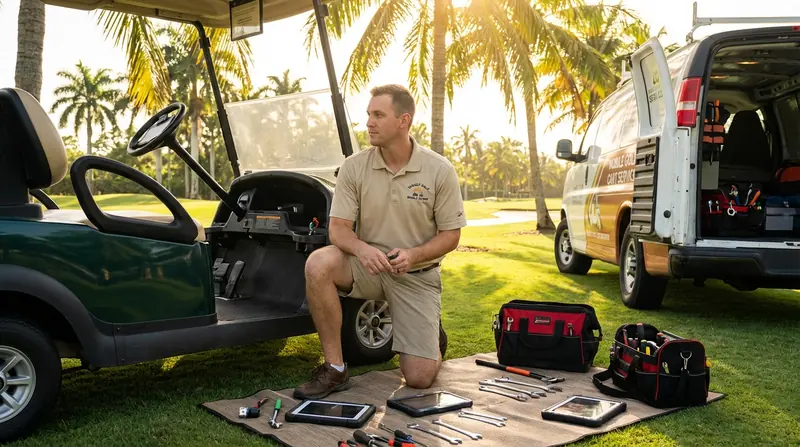
Boss Carts handles battery work on-site through mobile golf cart repair, including testing, reconditioning and full pack replacements for electric and lithium carts. Lithium battery conversions are also part of our custom builds, and our techs handle controller programming when a cart calls for it.
Not sure which way to go? Call or text (386) 225-7765, and keep your current pack healthy in the meantime with our charging guide.
Ready to cruise?
Street-legal 6-seaters, delivered clean and fully charged in Flagler Beach, Palm Coast, St. Augustine and Ormond Beach. Repairs and builds: call or text (386) 225-7765.